This observation prompted us to dive deeper into what Supabase actually is and which problems it solves for modern development teams.
What Is Supabase?
The tagline on supabase.com perfectly shows their value proposition: “Build over the weekend, scale to millions of users.”

Supabase positions itself as a backend development platform that uses Postgres as its database. The platform offers a comprehensive suite of services:
- Authentication – Easy implementation without building your own backend. Support for 23 authentication vendors and popular third-party services (Clerk, Firebase, etc.)
- Instant API Generation – Automatic CRUD endpoint creation for every database table
- Edge Functions – Serverless functions similar to AWS Lambda that allow you to execute logic without maintaining a backend
- Real-time Subscriptions – Custom WebSocket protocol for real-time data updates through Supabase
- Data Storage – Postgres database with a 500MB limit on the free tier and Row Level Security support
- Vector Embeddings – Generation and usage of embeddings with pgvector plugin support
“We’ve seen a significant shift in how clients approach backend development,” says Constantine Grinko, Senior Software Engineer at TWS. “Supabase allows teams to focus on what makes their product unique rather than rebuilding authentication and CRUD operations from scratch.”
Quick Setup
Supabase recently released a template for Next.js that lets you create a project in seconds with pre-configured:
- Cookie-based authorization
- TypeScript
- Tailwind CSS

They also include examples of authentication checks in middleware, sign-in/sign-out flows, and a className utility for merging Tailwind classes.
One of the best parts? Supabase doesn’t require any providers in your root component, the authorization logic happens entirely on the Next.js server side.
Authentication Made Simple
Supabase understands that managing authentication vendors is a significant part of any backend. They support numerous providers out of the box with no limits on implementations.
From Google to Discord and even Twitch, Supabase supports 23 authentication methods in total. They also allow integration with third-party authentication providers if you need more advanced features from services like Clerk.
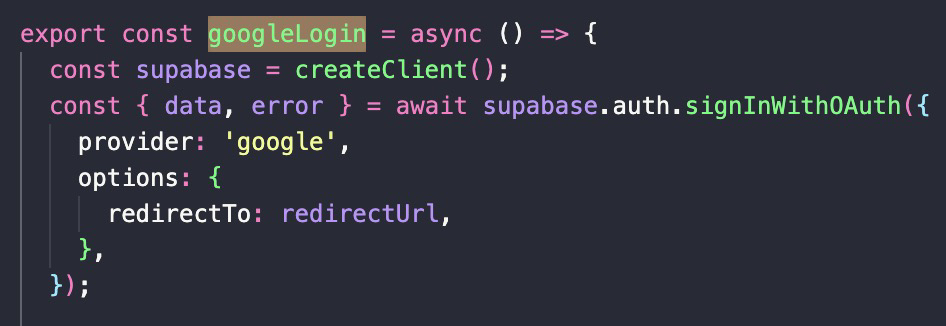
Here’s how the authorization works in code:
In a Google authentication example, you create a Supabase client using a function that provides the necessary environment variables and returns a browser client. Then you call signInWithOAuth, specifying the provider and the URL to redirect users after authentication.
It’s important to note that Supabase itself doesn’t provide authentication components, only the client through which you communicate with Supabase.
Database Management
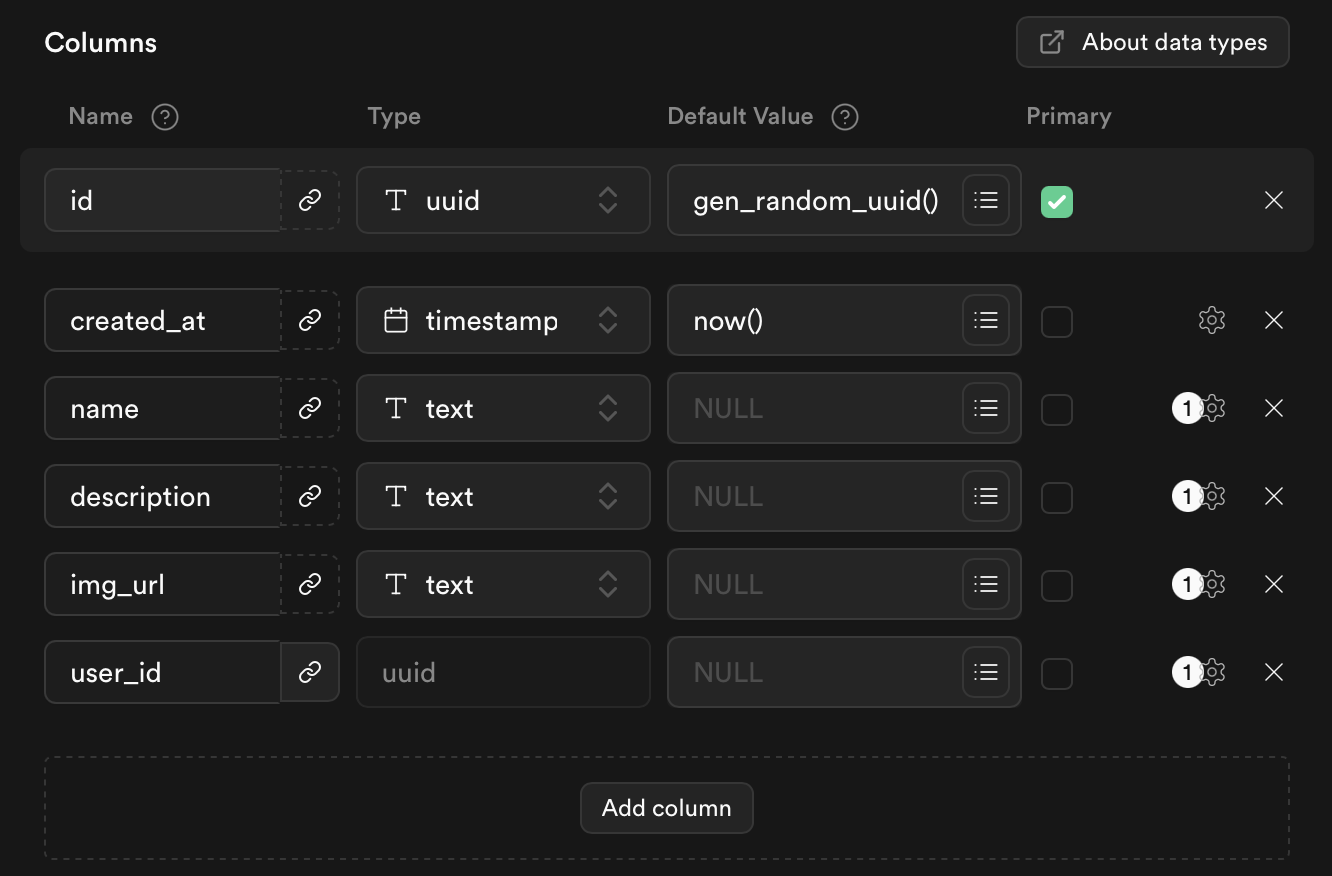
Supabase uses a Postgres database. You can write queries manually or use their editor, which automatically generates the necessary queries for database updates.
The editor allows you to add new fields or update existing ones in real-time, making database management straightforward and efficient.
Row Level Security Policies
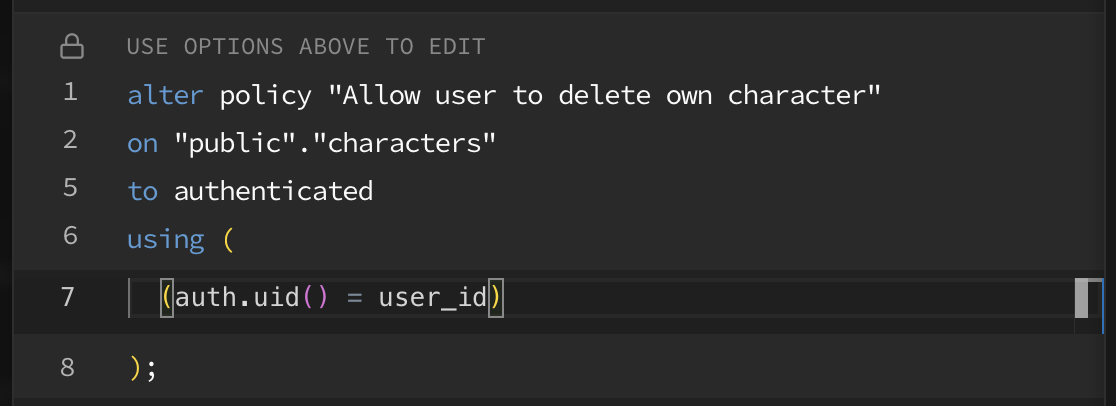
Since Supabase allows you to connect to their API directly from the browser and manipulate database data, every schema that’s accessed this way must have configured Row Level Security policies.
These policies are written in SQL and look like queries. For example, a policy that allows a user to delete from the characters table only if the record’s user_id matches the auth.uid from authentication.
Auto-Generated API
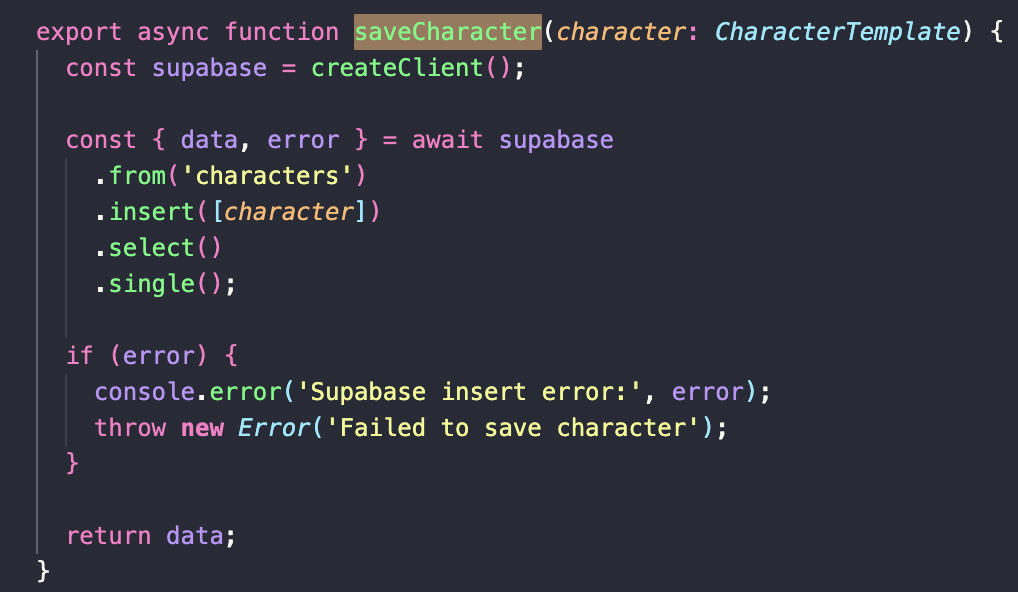
Here’s an example of using the Supabase client to add a new record to the characters table through their API:
- Select which table to work with:
.from('characters') - Specify that you’re adding a new character:
.insert([character]) - Add
.select()to return records from the table, since.insert()doesn’t return them automatically - Filter with
.single()because you only need one result
“This approach to endpoint generation allows teams to iterate and test quickly without having to update backend code,” Constantine Grinko explains. “All the CRUD operations are already generated for you, which significantly speeds up development time.”
Pros and Cons of Supabase
Conclusion
Supabase is an excellent tool that enables rapid MVP development when you need to quickly demonstrate results to clients. The technology continues to evolve, constantly rolling out new features and support for popular technologies like cron jobs, edge functions, and embeddings.
“At TWS, we recommend clients carefully evaluate their project requirements,” says Constantine Grinko. “For MVPs, prototypes, and applications where time-to-market is critical, Supabase is an outstanding choice. For projects requiring extensive customization or those with unique backend requirements, a traditional framework might be more appropriate.”
The key is understanding your project’s trajectory. If you’re building a proof-of-concept or a product where the backend isn’t the primary differentiator, Supabase can accelerate development significantly. For complex enterprise applications with specific compliance or integration needs, the limitations may outweigh the benefits.
100% worth trying, whether for client work or personal projects where backend development isn’t the primary focus. It’s a powerful tool that can significantly reduce time-to-market while maintaining professional-grade functionality.